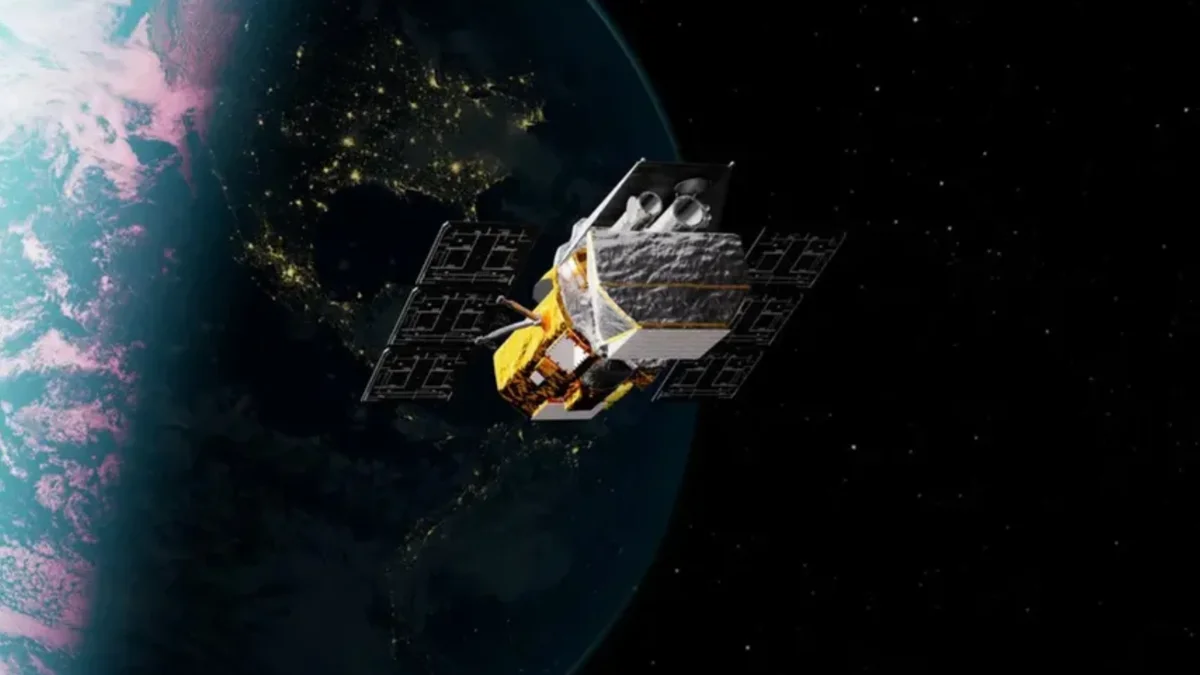
BLUF (Bottom Line Up Front): NASA’s Swift telescope ended its operations this Wednesday (4) after 22 years of space studies. The space observatory made an uncontrolled re-entry three months after an attempt to keep it in operation longer with the help of a private spacecraft, which would take it to a higher orbit.
According to satellite tracker Jonathan McDowell, the 1.4-ton observatory plunged into Earth’s atmosphere over the Sumatra region. And you can rest assured, as NASA officials predicted that the satellite would probably end up burning up during its passage through the atmosphere, and that the chances of any surviving pieces reaching the ground were extremely low.
Even so, some posts on social media suggest that observers managed to catch the telescope falling — this is what a video published by a user identified as “Surajit” on X, formerly Twitter, suggests, which shows the light trail left by the observatory in the sky.
Swift was launched in 2004 and, at the time, the initial idea was that the mission would last just two years and that it would focus on gamma ray bursts (GRBs), the most energetic and violent in the universe. The full name of the equipment was, in fact, Swift Gamma-Ray Burst Explorer — the term “swift” means “fast” in English, quite appropriate to indicate the agility of the spacecraft.
“Swift needed to detect and localize gamma-ray bursts, communicate its position to other observatories, and then orient its telescopes to capture images of the burst sites before their remnants dissipated,” explained S. Bradley Cenko, Swift principal investigator (PI) at NASA. “This normally took Swift about a minute to accomplish,” he concluded.
Throughout its useful life — which, incidentally, went well beyond those two planned years —, Swift recorded more than 2,000 GRBs and 1,400 supernovae, in addition to monitoring active black holes, comets and asteroids. And it could have remained active for longer, if the rescue mission had worked: the Swift was rapidly losing its support in the atmosphere, and if nothing was done, it would end up burning during atmospheric re-entry.
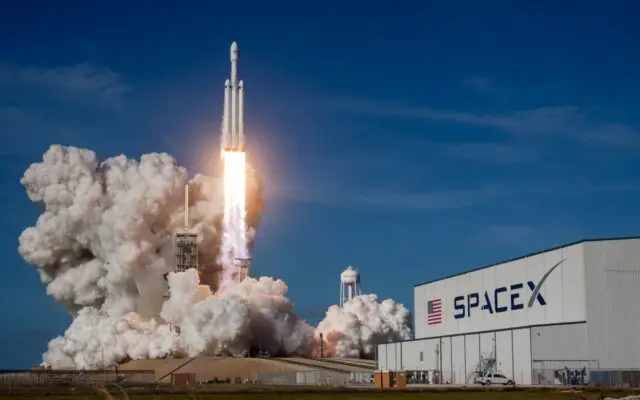
The solution found by NASA was the LINK robotic probe, a compact device with three mechanical arms, designed to attach to the Swift and propel it into a higher and safer orbit. The “rescue” was sent into space in July, but the spacecraft failed and was unable to approach the telescope. Even so, NASA highlighted the importance of the attempt, which represented an important step towards the development of other vehicles for maintaining and extending the useful life of satellites.
Silicon Dispatch Strategic Takeaways
- Desk Alignment: Verified dispatch within the Science & Space pillar.
- Technical Verification: Hardware and software specifications corroborated against manufacturer roadmaps.
- Market Impact: Analysis tailored for North American enterprise decision-makers and high-performance tech enthusiasts.
Affiliate Disclosure: Articles published by Silicon Dispatch may include verified affiliate partner links. If you purchase through these links, we may earn an affiliate commission at no additional cost to you.