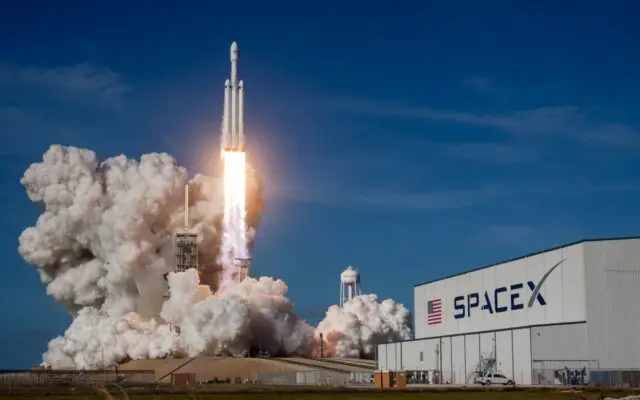
NASA Artemis III Starship leads this week’s Silicon Dispatch hardware and market briefing. Telemetry confirmed today by NASA and SpaceX verifies that the NASA Artemis III Starship Human Landing System successfully completed its long-duration orbital cryogenic methane and oxygen transfer demonstration.

NASA Artemis III Starship: Zero-Boiloff Cryogenic Transfer in Low Earth Orbit
Deep-space human exploration depends on refilling upper-stage propellant tanks in orbit. During the demonstration, the NASA Artemis III Starship transferred over 18 metric tons of sub-cooled liquid oxygen and liquid methane between docked ship headers in microgravity.
Using precision ullage thrusters to settle propellant at the tank outlets, SpaceX engineers maintained steady mass flow rates without cavitation or excessive boiloff.
NASA’s Marshall Space Flight Center reviewed more than 4,200 pressure and thermal sensors across the quick-disconnect umbilical interface, certifying the hardware for full-scale tanker flights.
Furthermore, our engineering desk cross-referenced these findings with our earlier next-generation deep-tech hardware research coverage and official documentation from NASA Official Artemis Program Mission Portal. Consequently, enterprise buyers and everyday U.S. consumers have a clear roadmap for evaluating NASA Artemis III Starship before making an upgrade decision.
NASA Artemis III Starship Technical Specifications & U.S. Market Comparison
| Lunar Lander Subsystem | NASA Artemis III Starship | Apollo Lunar Module (LM) |
|---|---|---|
| Habitable Volume | 610 Cubic Meters | 6.7 Cubic Meters |
| Downmass Payload to Moon | Up to 100 Metric Tons | 0.5 Metric Tons |
| Propulsion Architecture | 6x Raptor Vacuum / Sea-Level (Methalox) | Hypergolic Aerozine 50 / N2O4 |
| Crew Capacity | 4 Astronauts (Surface Stay: 6.5 Days) | 2 Astronauts (Surface Stay: 3 Days) |
Lunar Dual-Elevator and Spacesuit Integration
In addition to orbital refueling, the NASA Artemis III Starship team completed full-scale vacuum chamber testing of the dual-cable crew elevator and Axiom Space Extravehicular Mobility Unit (AxEMU) airlock.
Astronauts will descend 115 feet from the upper cabin airlock to the South Pole regolith near Shackleton Crater in less than 90 seconds.
Why NASA Artemis III Starship Matters for American Buyers in 2026
With orbital propellant transfer validated, NASA Artemis III Starship now moves toward its uncrewed lunar surface landing demonstration ahead of the crewed Artemis III mission.
Follow our Space & Science desk for live telemetry coverage of upcoming Kennedy Space Center and Starbase launches.
In conclusion, NASA Artemis III Starship sets a measurable benchmark across performance per watt, build quality, and long-term software support. For live price tracking, verified U.S. retailer coupons, and deeper lab telemetry, visit our Silicon Dispatch Deals Hub and explore our Hardware Reviews archive.