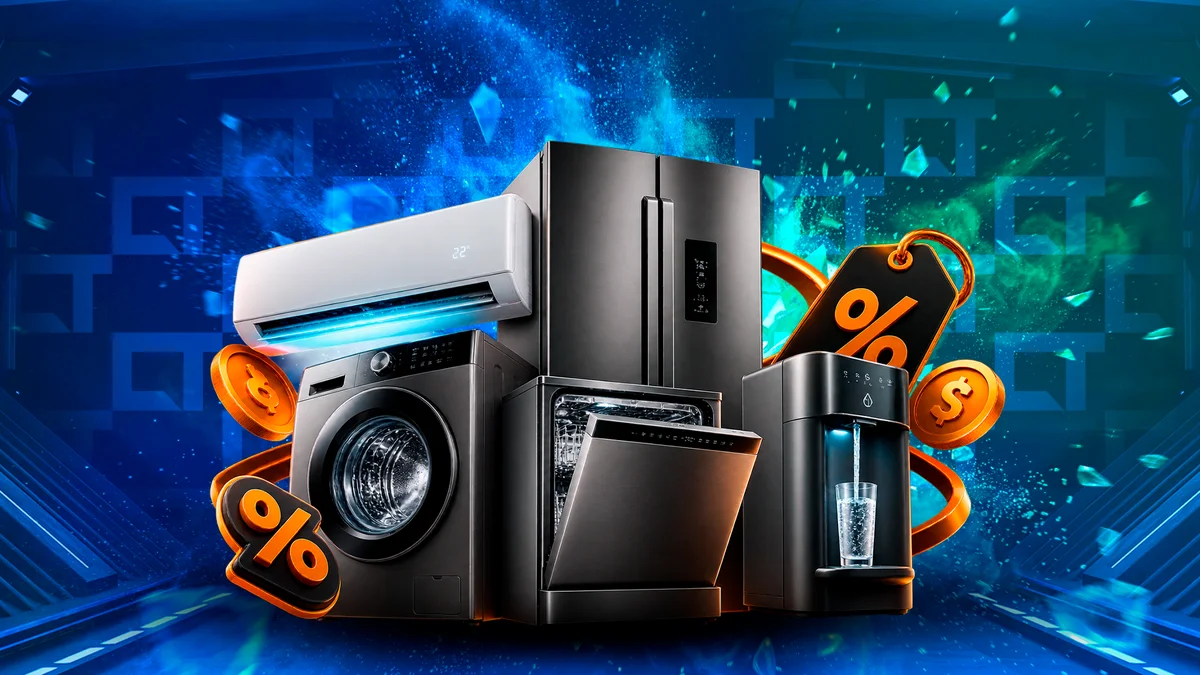
BLUF (Bottom Line Up Front): One of the focuses of Black Friday is to take advantage of the lowest possible price to buy the appliance that has needed to be replaced for some time. However, if you are looking to save on electricity and water bills, it may be worth spending a little extra during the promotion period to reduce expenses later.
This logic is especially interesting for products that are part of the household routine, such as refrigerators, washing machines and air conditioners. In the case of these items, energy efficiency and water consumption can make a difference to the budget, especially when the equipment is used frequently.
With this in mind, we have put together five products that deserve attention on Black Friday 2026. Some have a payback period that is relatively easy to calculate, while others depend heavily on the household’s consumption habits:
If you usually use the air conditioning for several hours a day, investing in an Inverter model may mean a higher initial expense, but also a subsequent saving on your electricity bill. This technology adjusts the compressor rotation according to the refrigeration need, instead of relying solely on the on and off cycles common in conventional models.
With this operation, the Inverter device tends to consume less electricity than a conventional device without compromising thermal comfort, even if the initial investment is greater. In other words, the extra amount paid for the more advanced equipment can be offset by savings on the electricity bill.
To make a comparison, we can use 12,000 BTU models, cold only, which are turned on for eight hours a day. The reference energy tariff is R$0.85 per kWh.
In this scenario, the conventional model consumes around 65.5 kWh per month, generating an estimated cost of R$ 55.68 on the electricity bill, while the Inverter version uses approximately 41.7 kWh per month, with an expense of R$ 35.45.
The difference in consumption is 23.8 kWh per month, which represents a reduction of approximately 36.3% in electricity expenditure. Applying the tariff considered in the calculation, this is equivalent to an estimated saving of R$20.23 per month, or approximately R$242.76 per year on the electricity bill for those who choose the Inverter model.
Silicon Dispatch Strategic Takeaways
- Desk Alignment: Verified dispatch within the AI & Emerging Tech pillar.
- Technical Verification: Hardware and software specifications corroborated against manufacturer roadmaps.
- Market Impact: Analysis tailored for North American enterprise decision-makers and high-performance tech enthusiasts.
Affiliate Disclosure: Articles published by Silicon Dispatch may include verified affiliate partner links. If you purchase through these links, we may earn an affiliate commission at no additional cost to you.